Author: felisuk
-
The Andean Mountain Cat
The story of the ghost cat: The year is 1998. Humans have so far, walked on the moon, sent satellites into the farther reaches of our solar system and taken pictures of all of our orbiting planets. We have even captured photos from the surface of Mars. However, before this time one cat had almost…
-
The secrets behind how small wild cats remain so elusive:
Many creatures in the animal kingdom use camouflage to help them hide from predators and for hunting. This is especially important for cats as many of them use stalking as their prime technique for catching prey. Today we explore how cats use camouflage to help them hide, and hunt, and what other tricks they use…
-
The Cats Whiskers
A look at how cats use their whiskers in the wild: Throughout these blog updates, we have focused on many attributes that make small wild cats special. Whether that be paws, tails or even ears, cats have evolved over time to have some unique morphology that makes them brilliant at what they do. Today we…
-

Sand Cats
As discussed in previous blogs such as why are there no cats in Australia, its widely accepted that all wild cats evolved from Proailurus (meaning ‘before the cat’) around 30 million years ago when they first appeared in the forests of Eurasia. At this time Europe was a vast sub-tropical forest; at this time a satellite…
-
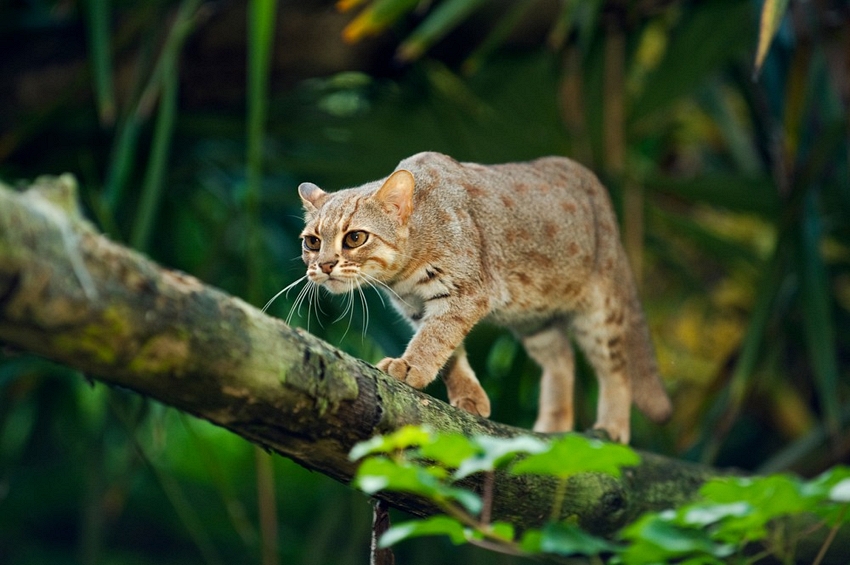
Rusty Spotted Cats
Often called the Hummingbird cat, the Rusty Spotted cat is one of the smallest of the 33 small wild cat species and is about the size of a domestic kitten. That’s pretty much where the similarities stop though as this little cat is a fearless predator! Its Latin name, Prionailurus rubiginosus, tells us it’s from the Prionailurus lineage…
-
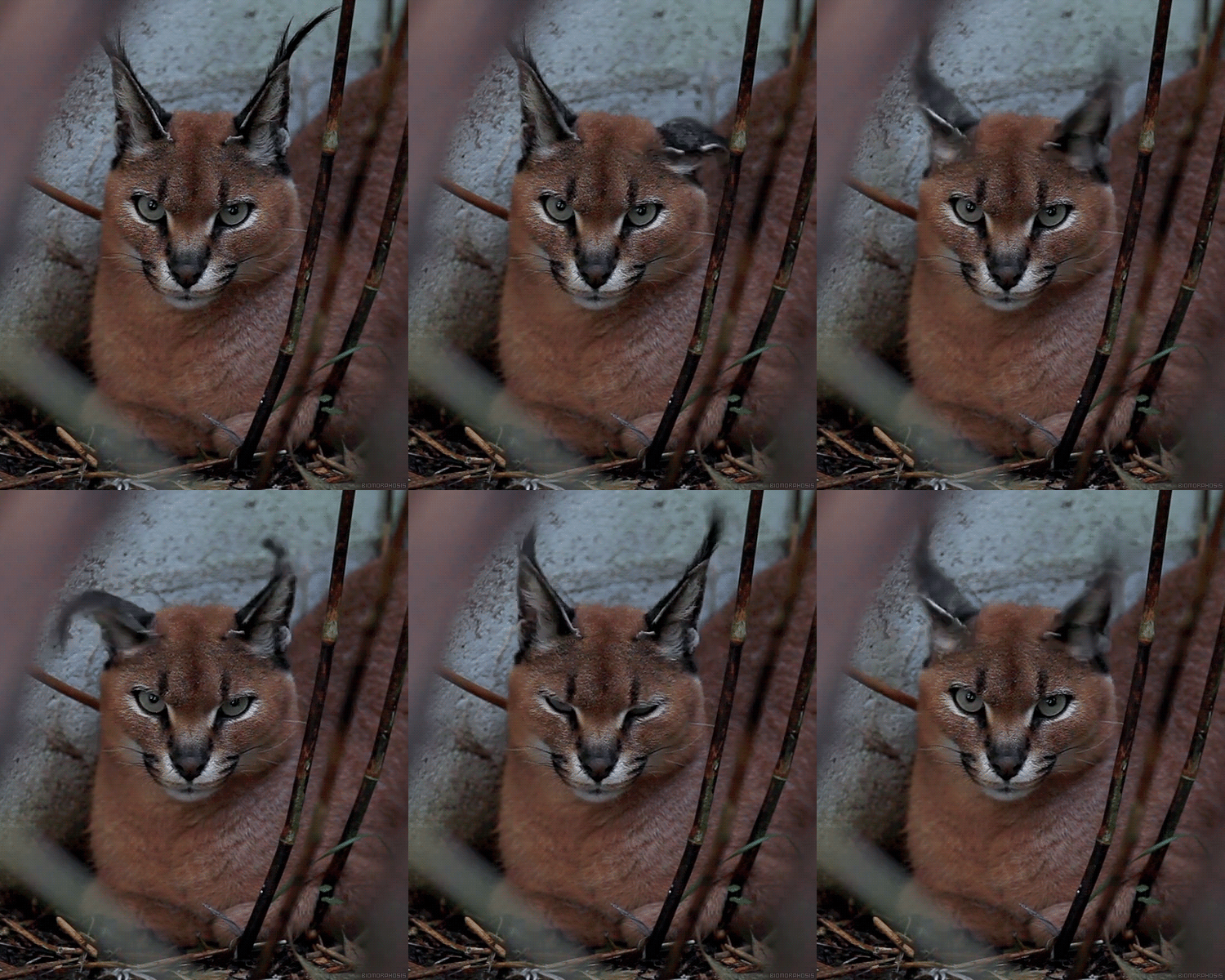
Mew talking to me? How small wild cats communicate
How cats communicate with humans is a much-discussed topic of conversation. There are many different theories surrounding domestic cats looking at how and why they try to communicate with us. Some theories even suggest that a cat’s meow has been developed over thousands of years of domestication to mimic that of a human baby to…
-
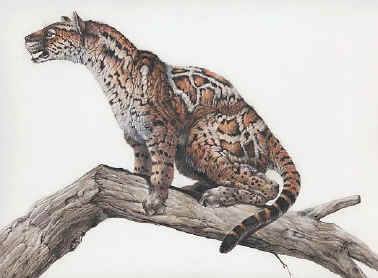
Cataptability – did cats ability to adapt save it from extinction?
When Proailurus walked the earth the world would have been a very different place to what we have today. The time is around 25 million years ago and the widely accepted last common ancestor of all of today’s cat family roamed the forests of Eurasia. At this time, during the late Oligocene and Miocene period, it’s environment was most likely warm, humid and…
-
Lynx Lynx?
One of the most interesting of the small wild cat lineages is the Lynx lineage. Four separate species in one genus with impressive distribution in the Northern hemisphere from North West Canada to the far reaches of North East Russia. One of the reasons why they are so interesting is that despite millions of years…
-

Small wild cat names etymology:
Cats names and their meanings are often fascinating (at least in our eyes). Many small wild cats are named after the naturalist that discovered them, or more accurately, were the first to document them for science. Some of these cats also have interesting native names or their scientific name interestingly relates to their behaviours or…
-
Marbled Cats
One of the most elusive of the small wild cats if the Marbled cat. Due to a lack of research not much is known about this beautiful cat. Through camera trap sightings we think this cat diurnal and we understand they hunt both in the trees and upon the forest floor. Their appearance is, as…
 FELIS-UK